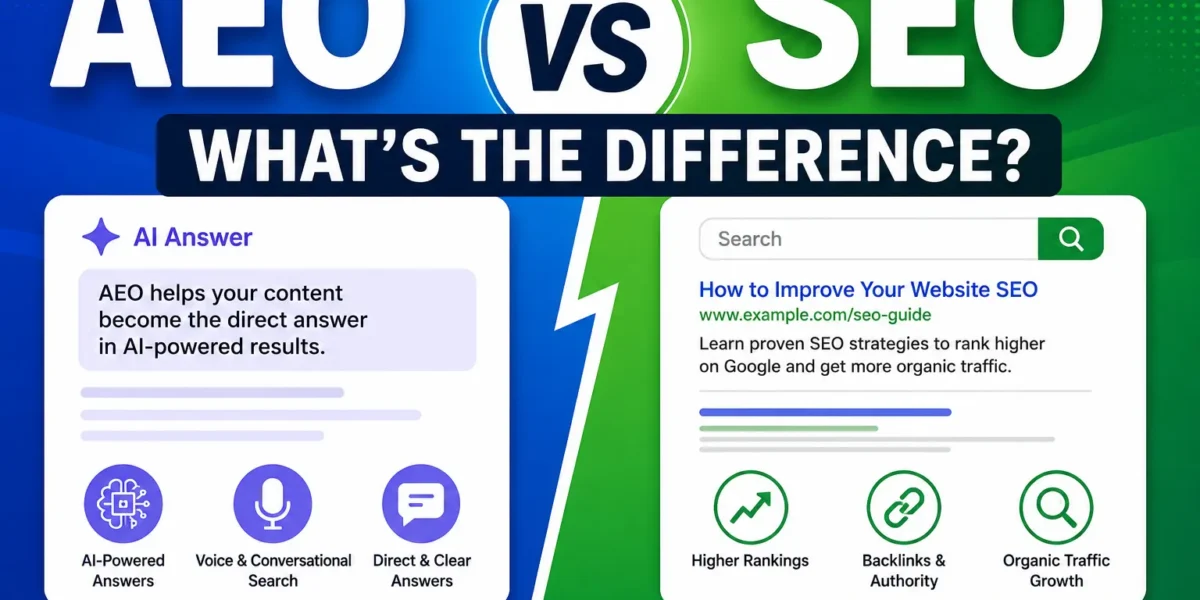

Search stopped being just about ranking links a while ago. It’s now answer-driven, powered by AI, and used by billions of people every month. Google AI Overviews alone reach more than 2 billion monthly users, a scale that shows how quickly AI-generated answers have become the default search experience, not a novelty.
That shift shows up differently depending on where you’re standing. Globally, AI Overviews trigger on roughly 48% of tracked searches. In India, that number sits at 26.8%, third highest in the world after Indonesia and the Philippines/Mexico. And India leads the planet in one number that matters more than any other: AI adoption. 59% of Indian consumers and businesses now use AI tools regularly, ahead of the UAE, Singapore, and China.
Put plainly: your customers in Mumbai, Pune, or Coimbatore are more likely to ask ChatGPT before they Google. If your content isn’t built for both search engines and answer engines, you’re already invisible to a growing share of the people looking for you.
This guide breaks down what SEO and AEO actually are, where they overlap, where GEO fits into the picture, and how Indian businesses specifically should prioritize the two.
What Is SEO?
SEO, or Search Engine Optimization, is the process of improving your website so it appears higher in Google and other search engine results.
The goal is simple: help more people find your website without paying for ads.
When your pages are well optimized, search engines can better understand your content and show it to people searching for topics related to your business.
SEO is built on four main areas:
- On Page SEO: Optimizing your content, headings, titles, images, and meta descriptions so each page is relevant and easy to understand.
- Off Page SEO: Building your website’s reputation through backlinks and mentions from trusted websites.
- Technical SEO: Improving your site’s speed, mobile friendliness, security, and overall structure so search engines can crawl and index it easily.
- Keyword Research: Finding the words and phrases your audience is searching for and creating content that matches their intent.
A strong SEO strategy helps your website rank higher, attract qualified visitors, and build long term authority.
What Is AEO (Answer Engine Optimization)?
Answer Engine Optimization, or AEO, is the process of creating content that directly answers a user’s question.
Instead of simply trying to rank on Google, AEO focuses on becoming the answer shown in places like Google AI Overviews, Featured Snippets, voice assistants, and AI chatbots.
The goal is to make your content clear, well structured, and easy for AI systems to understand.
AEO helps you:
- Answer common questions clearly and directly.
- Increase your chances of appearing in Featured Snippets and AI Overviews.
- Optimize content for voice searches and conversational queries.
- Build trust so AI platforms are more likely to reference your content.
As more people search using AI tools, AEO is becoming an important part of modern content strategy.
Where Does GEO Fit In?
If you have been learning about AI search, you have probably come across another term: GEO, or Generative Engine Optimization.
Although AEO and GEO are closely related, they focus on different platforms.
- AEO helps your content appear in AI features within traditional search engines, such as Google AI Overviews, Featured Snippets, and voice search results.
- GEO focuses on getting your content cited by standalone AI tools like ChatGPT, Perplexity, Claude, and Gemini when users ask questions directly.
The good news is that both strategies rely on many of the same best practices, including creating high quality content, using clear headings, adding structured data, and citing trustworthy sources.
| Strategy | Purpose |
| SEO | Helps your website rank in search engines. |
| AEO | Helps your content become the direct answer in AI powered search results. |
| GEO | Helps AI tools like ChatGPT and Perplexity discover and reference your content. |
How SEO and AEO Differ at a Fundamental Level
SEO and AEO differ in what “success” actually looks like. SEO is designed to bring users to your website by ranking pages in search results. AEO shifts the goal to delivering the answer directly inside an AI-driven interface — often without the user ever clicking through to your site at all.
- SEO prioritizes website traffic; AEO prioritizes answer visibility
- SEO ranks blue links; AEO targets position zero and AI summaries
- SEO depends on clicks; AEO frequently delivers zero-click results
- SEO serves traditional search behaviour; AEO serves conversational and voice queries
AEO vs SEO: Side-by-Side Comparison
| Dimension | SEO | AEO |
| Fundamental Goal | Rank higher to earn clicks | Get chosen as the answer, often without a click |
| Core Question | “How do we get found?” | “How do we get chosen?” |
| User Intent | Informational, transactional, navigational research | Immediate, conversational, question-based |
| Query Type | Broad searches, comparison-driven queries | Direct questions: “what,” “how,” “why,” “who” |
| Content Structure | Long-form, in-depth coverage of a topic | Short, clear answers in Q&A, lists, step-by-step format |
| Typical Length | 1,000–2,000+ words | 40–60 word direct answers with supporting context |
| Technical Priorities | Backlinks, site architecture, indexing, speed | Schema markup, NLP clarity, entity-based optimization |
| Visibility Format | Blue links in SERPs | Featured snippets, AI summaries, voice responses |
| User Journey | Search → Click → Browse → Convert | Ask → Get Answer (often zero-click) |
| Success Metrics | Rankings, organic traffic, CTR | Snippet ownership, AI citations, brand mentions |
How Search Engines and Answer Engines Actually Work
To understand why SEO, AEO, and GEO matter, you first need to know how search engines and AI answer engines find information.
Although they may seem similar, they work in different ways.
How Traditional Search Engines Work
Search engines like Google and Bing are designed to help users find the most relevant web pages for a search query.
They do this in three simple steps:
- Crawl: Search engine bots scan websites and discover new or updated pages.
- Index: The pages are stored and organized so the search engine understands what each page is about.
- Rank: When someone searches for a topic, the search engine decides which pages are the most helpful and displays them in the search results.
To rank pages, search engines consider hundreds of factors, including content quality, backlinks, page speed, user experience, and search intent.
How AI Answer Engines Work
AI platforms like ChatGPT, Perplexity, Gemini, and Google AI Overviews have a different goal.
Instead of showing a list of websites, they try to give users one complete answer.
To do this, most AI systems follow a process called Retrieval Augmented Generation (RAG).
In simple terms, here’s what happens:
- The AI understands the user’s question.
- It searches trusted sources for relevant information.
- It compares those sources based on quality, relevance, and credibility.
- It combines the best information into a single, easy to understand answer, often with citations.
Because AI systems evaluate content differently, a page that ranks well on Google is not guaranteed to appear in AI generated answers.
Why Rankings and AI Citations Are Different
Many businesses assume that ranking on the first page of Google automatically means AI tools will recommend their content.
That is no longer true.
Search engines focus on ranking the best web pages, while AI answer engines focus on finding the best information to answer a question.
This means AI may choose content that is:
- Easier to understand.
- Better organized.
- More up to date.
- Supported by trustworthy sources.
- Written in a question and answer format.
As a result, even pages outside Google’s top search results can appear in AI Overviews or AI chatbot responses if they provide clearer and more useful answers.
Why This Matters for Indian Businesses
Most articles about AEO are written for businesses in the United States. However, the Indian search landscape is changing even faster.
Here are a few trends every Indian business should know:
- India has one of the highest AI adoption rates in the world, with nearly 59% of people regularly using AI tools.
- Google AI Overviews appear in more searches in India than in many other countries, including the United States.
- AI tools like ChatGPT, Gemini, and Perplexity are now widely used not only in metro cities but also across Tier 2 and Tier 3 cities.
- Voice search continues to grow, especially for Hindi and regional language queries.
- Many AI systems still rely heavily on Western content, creating an opportunity for Indian businesses to publish high quality local content and become trusted sources.
Want to know where your business actually stands in AI search right now? Digital Eryndor’s SEO Services build the technical and content foundation both SEO and AEO depend on, and our AI Marketing Solutions help you track and grow visibility across ChatGPT, Perplexity, and Google’s AI features. Get in touch for a free audit of where you stand today.
FAQs About AEO vs SEO
Do you need SEO or AEO?
You need both. SEO helps people find your website, while AEO helps AI platforms understand and recommend your content.
Is AEO replacing SEO?
No. AEO builds on SEO, not replaces it. A strong SEO foundation makes it easier for AI search engines to trust and cite your content.
What is the difference between AEO and GEO?
AEO focuses on AI features within search engines, such as Google AI Overviews and Featured Snippets.
GEO focuses on getting your content cited by AI tools like ChatGPT, Perplexity, Claude, and Gemini.
Can small businesses benefit from AEO?
Yes. AI platforms prioritize helpful and well-structured content, so even small businesses can compete with larger brands.
Does AEO increase website traffic?
It can, but not always. AEO often improves brand visibility and trust, which can lead to more branded searches, clicks, and conversions over time.
How long does it take to see AEO results?
There is no fixed timeline, but many websites begin seeing improvements within one to three months. Strong, consistent results usually take three to six months, depending on your content quality and competition.